
Cockatiels are smart birds, so there must be something that they see which causes them to go bonkers at night. But can cockatiels see at night at all? I explain why night frights happen and what you should do about it.
FREE Training to Stop Your Bird's Biting
Get FREE access to Beak School – the only system designed to train your bird. Stop behavioral problems like biting, screaming, feather plucking.
Get the Free TrainingCockatiels possess excellent vision, but they are diurnal birds. So, you might wonder if they can see at night.
FREE Training to Stop Your Bird's Biting
Get FREE access to Beak School – the only system designed to train your bird. Stop behavioral problems like biting, screaming, feather plucking.
Get the Free TrainingIf you have pet cockatiels, their regular night frights are sure to make you curious as to what they see that causes them to get spooked at night.
It’s true that cockatiels have a wider field of vision than humans and can also see a wide range of colors, including ultraviolet light.
However, they do not see very well in the dark. We’ll be exploring this in greater detail soon.

Are Cockatiels Nocturnal?
As I said before, cockatiels are diurnal animals.
A domesticated cockatiel might stay in a well-lit room for a few hours even after sunset, but wild cockatiels retire into their trees as soon as it gets dark.
They have evolved in this way to get the maximum out of the sun’s energy during the day, just like most other animals and birds.
Cockatiels finish all their activities during the day. You will never find them flying around at night.
Can Cockatiels See at Night?
Due to their diurnal nature, cockatiels have not developed night vision, unlike some birds like owls.
A cockatiel’s ability to see at night is similar to that of humans, if not worse.
In fact, their night vision is so bad that it is almost next to nothing. In the dark, they perceive everything as shapes and shadows – just like we do.
If you’ve ever wondered why your cockatiel suffers from night frights, this is one of the main reasons behind it.
When cockatiels are alerted and woken up by an unusual noise, their inability to see what’s wrong sends them into a panic.
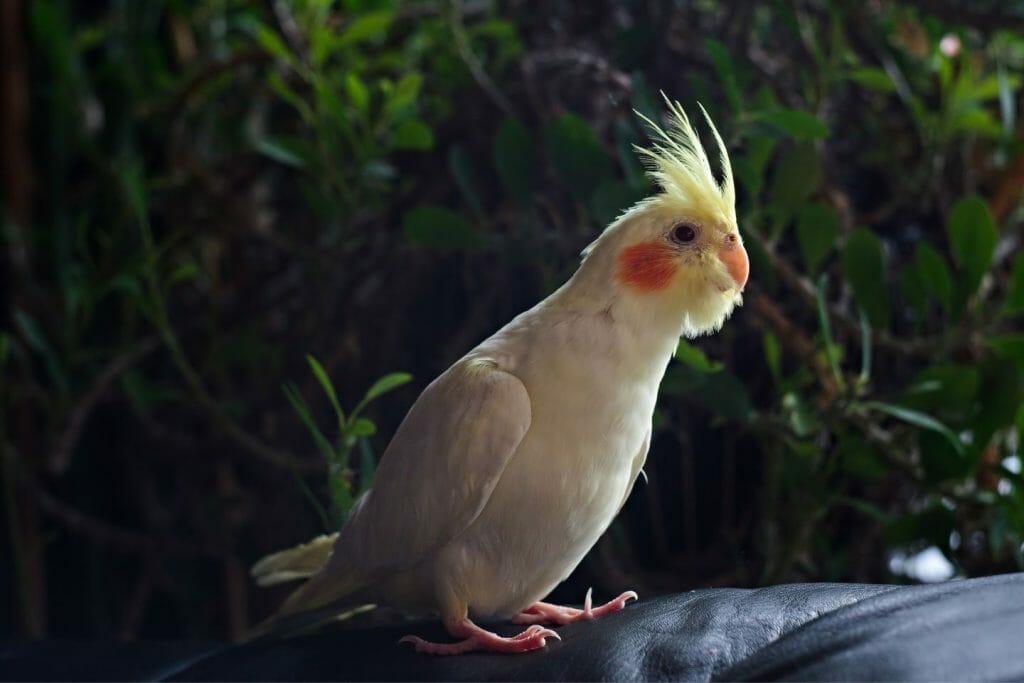
Night fright is a crucial survival instinct that cockatiels have developed as prey animals.
A wild cockatiel flock sleeping in a tree is at constant risk from predators.
When woken up by a noise, a cockatiel alerts the rest of the group by squawking loudly and beating its wings.
How To Help Your Cockatiel With Night Frights?
Now that you know about their vision at night and why it leads to night fright, it is obvious to ask what you can do about it.
After all, a frightened cockatiel can easily injure itself by beating its wings too hard against the cage bars or perches.
Besides, night frights prevent a bird from getting uninterrupted sleep, making it cranky and sick.
Here are some tips on how you can help a cockatiel with night frights.
FREE Training to Stop Your Bird's Biting
Get FREE access to Beak School – the only system designed to train your bird. Stop behavioral problems like biting, screaming, feather plucking.
Get the Free TrainingAvoid making sudden movements or noises at night
This might seem a little obvious, but the most basic step to prevent night frights is avoiding noises that might scare your feathered friend at night.
Try to place the cage in a quieter corner of your home, away from all the noisy activity.
If you intend to watch the telly or listen to music, try to keep the volume down or move the cage to a different room.
Put on a dim night light
While it’s true that your cockatiel needs darkness to sleep properly, it’s not completely dark in the wild.
Cockatiels still get moonlight out there, which you can substitute with a dim light positioned near the cage.
The light must be strong enough that the bird doesn’t get scared by every little movement in the room but not so strong that it would have trouble falling asleep.
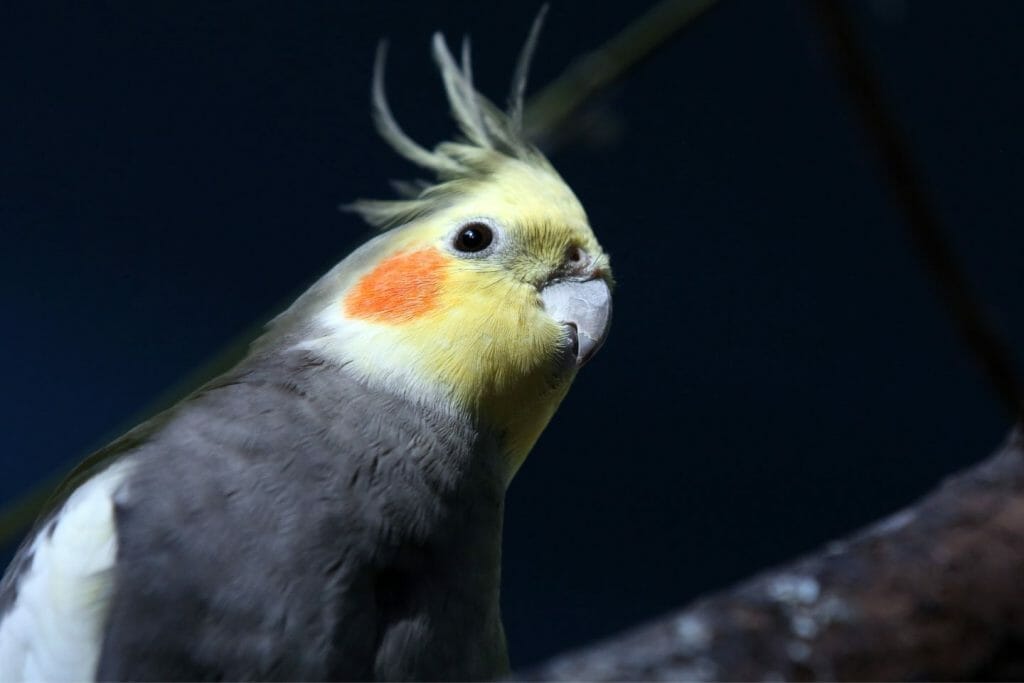
Cover the cage
You may also consider covering the cage with a breathable material, provided the night light can still emit inside.
The cover will help block out sudden noise and light, thus reducing the instances of night frights significantly.
Don’t move around stuff in the cage
Apart from factors like sudden noise and bright light, cockatiels might also experience night frights if they feel something is off about their surroundings.
For instance – their water dishes, food bowls, perches, or toys not being where they usually are.
Cockatiels have a very good memory and create an accurate mental map of their cages.
FREE Training to Stop Your Bird's Biting
Get FREE access to Beak School – the only system designed to train your bird. Stop behavioral problems like biting, screaming, feather plucking.
Get the Free TrainingIt’s quite common for them to freak out when they can’t find something in the dark. Avoid shifting around things in your cockatiel’s cage to prevent this.
Frequently Asked Questions
What do cockatiels do at night?
Like all diurnal creatures, cockatiels sleep at night.
Most often, they do this with the head tucked under a wing, but they might also sit with one or both eyes closed.
On average, adults sleep for up to 12 hours, while baby cockatiels might sleep even longer.
In most cases, they start getting ready for sleep as soon as sundown happens.
Do cockatiels fear the dark?
Cockatiels get spooked out in the dark very easily, owing to their poor night vision.
They are more vulnerable to night frights than other species of pet birds.
This is why it’s a good idea to leave a dim light on near your cockatiel’s cage at night.
You should also move all activity away from their room at night, as I discussed earlier.
How many hours of light do cockatiels need?
Cockatiels require about 10 to 12 hours of light a day.
They need sunshine to synthesize vitamin D in their bodies like us. Vitamin D is crucial for calcium absorption in parrots.
If the temperatures are mild, you should carry the cage outside during the day for sunshine.
However, make sure to lock the cage door properly – you could lose your bird if you aren’t careful.
Can I sleep with my cockatiel?
It might be tempting to sleep with your cockatiel, especially if it’s affectionate and loves getting cuddled.
However, this is a very bad idea and puts your pet in danger. It’s easy to roll over the bird in your sleep and crush or suffocate it to death.
Wrapping up
I hope that clears up all the questions in your mind about a cockatiel’s ability to see in the dark.
If you’re a cockatiel owner, please follow the tips I shared to reduce the occurrence of night frights.
Thank you for reading, and I hope you can now help your cockatiel sleep better with fewer disturbances.
